
What Is the Difference Between a Chargeback and a Refund?
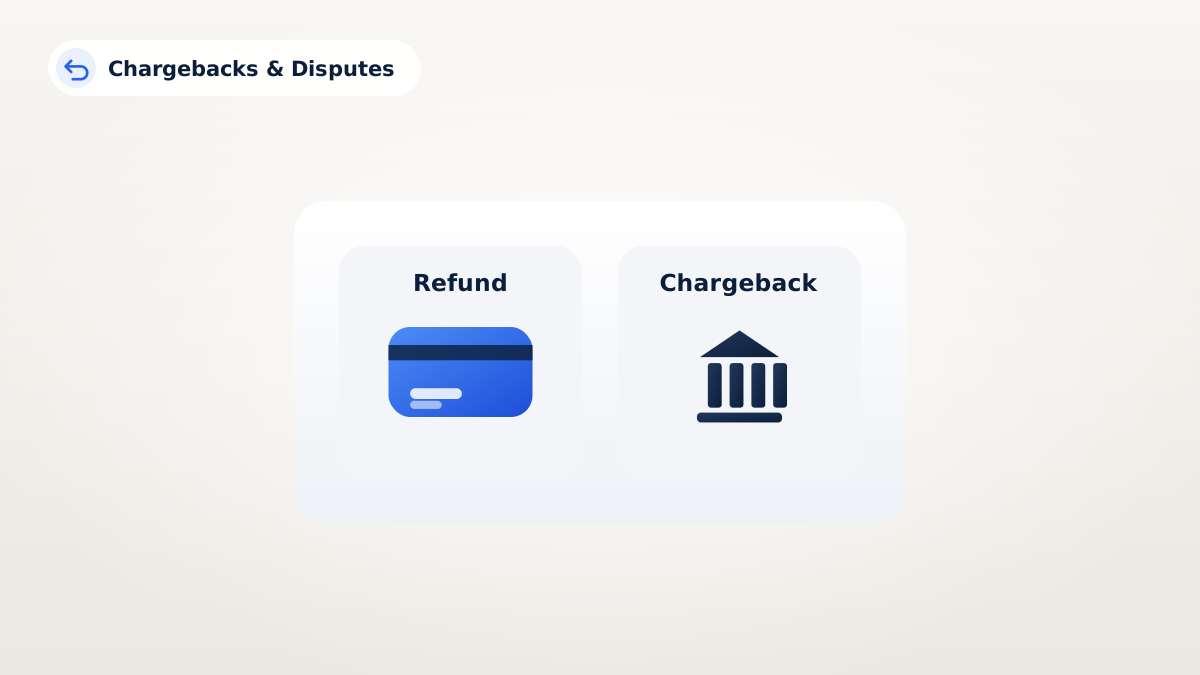
A refund is returned by the merchant on request; a chargeback is a reversal started by the cardholder's bank through a dispute. Chargebacks usually cost merchants more in fees and time.
Direct Answer
A refund is returned by the merchant on request; a chargeback is a reversal started by the cardholder's bank through a dispute. Chargebacks usually cost merchants more in fees and time.
Direct Answer
A refund is a return of money that the merchant chooses to issue. A chargeback is a forced reversal that the cardholder's bank starts after the customer files a dispute. Both return money to the customer, but they follow different paths and have different costs for the merchant.
How It Works
With a refund, the merchant sends the money back directly through their payment system, and the case is closed. With a chargeback, the cardholder contacts their bank, the bank opens a dispute, and the merchant is asked to respond with evidence. If the chargeback stands, the funds are returned to the cardholder and the merchant may also be charged a dispute fee.
Key Points
- A refund is merchant-initiated; a chargeback is bank-initiated.
- Chargebacks can carry dispute fees and require time to respond.
- A high chargeback rate can lead to monitoring programs or other consequences set by card networks and processors.
- Offering a quick, easy refund can prevent some disputes from becoming chargebacks.
What Merchants Should Know
Make your refund policy clear and easy to find, and respond promptly to customer complaints. When a customer is likely to dispute a charge anyway, a prompt refund is often simpler than a chargeback. Keep records of both so you can see patterns.