What Are Chargeback Reason Codes?
A chargeback reason code is a code assigned to a dispute that states its basis, such as fraud or goods not received. It determines what evidence a merchant needs to respond.
Direct Answer
A chargeback reason code is a code assigned to a dispute that states its basis, such as fraud or goods not received. It determines what evidence a merchant needs to respond.
Direct Answer
A chargeback reason code is a label attached to every chargeback that states why the cardholder or issuing bank disputed the transaction. Each card network maintains its own list of codes, and each code has its own rules for what evidence can be used in response.
How It Works
When a dispute is opened, the issuing bank assigns a reason code. The merchant receives that code with the chargeback notice. Broadly, codes fall into groups such as fraud, authorization problems, processing errors, and consumer disputes about goods or services. Because the rules differ by code, a response that works for one reason may not work for another.
Key Points
- The reason code tells you what the dispute is about and what evidence to send.
- Card networks use different code lists and numbering.
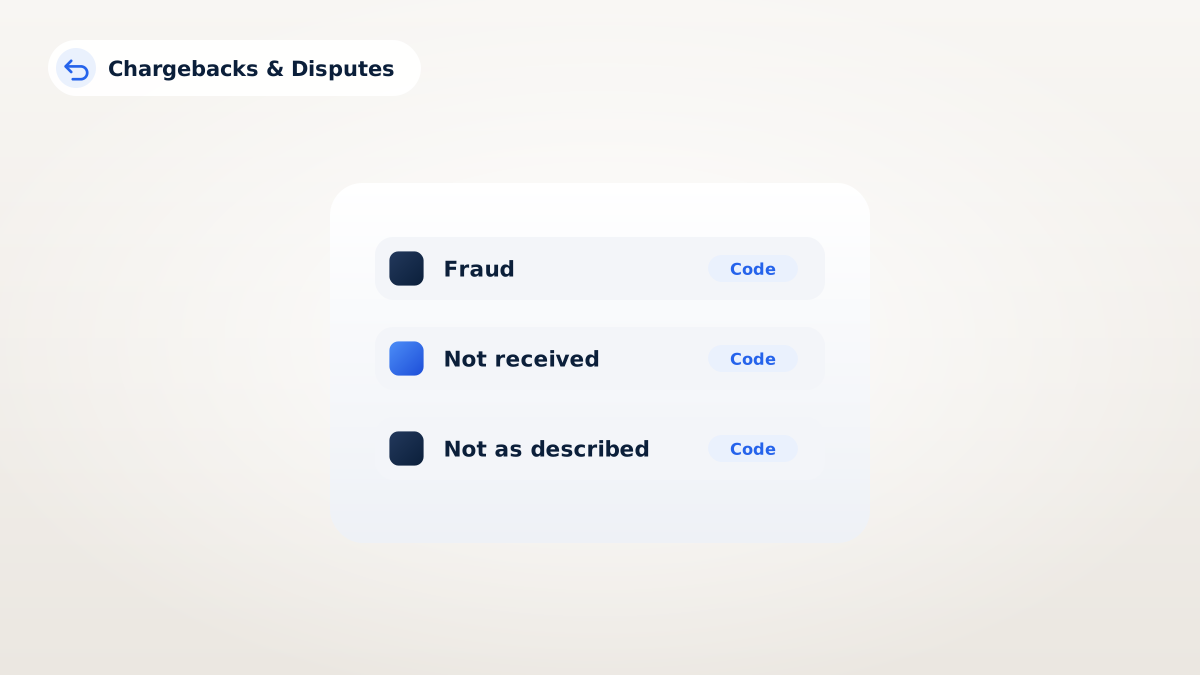
- Common themes include fraud, product or service not received, and not as described.
- Tracking codes over time shows where your process is breaking down.
What Merchants Should Know
Review your chargebacks by reason code, not just by count. A cluster of the same code usually points to a fixable issue, such as unclear billing descriptors, slow delivery, or weak fraud checks. Match your evidence to the specific code before you respond.